
How Mass Layoffs Affect Workplace Culture, Innovation, and Retention
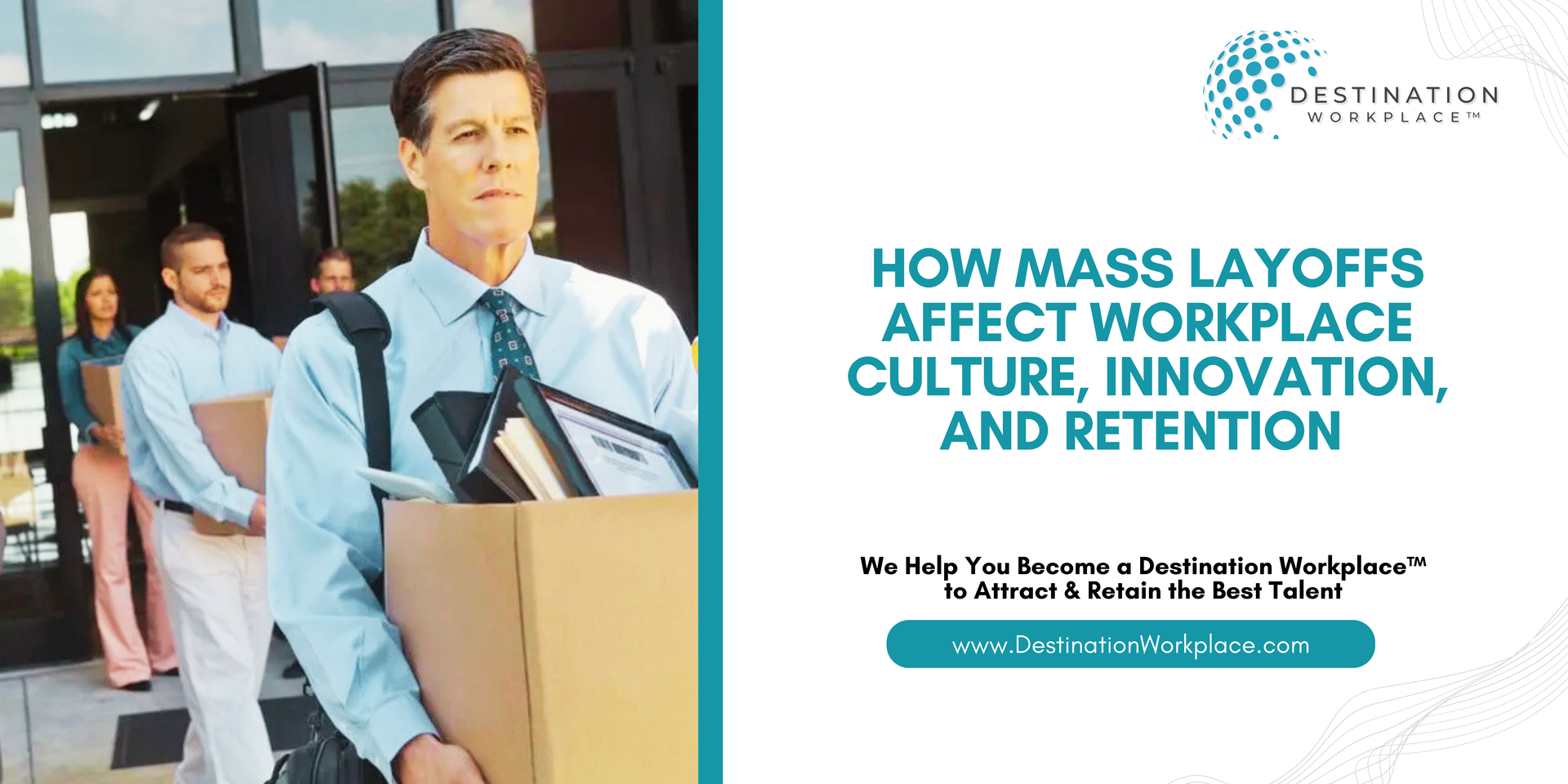
Mass layoffs and budget slashes can be a good strategy and are sometimes necessary for profitability, however, such extreme measures can also erode workplace culture, destroy innovation, and create a revolving door of top talent. So, where’s the line between smart cost-cutting and reckless business decisions? Let’s break it down. Think of a company like a body. Shedding unnecessary expenses is like losing excess weight to become leaner and more efficient. But if you start cutting muscle—your innovation, your talent, your company culture—you end up weaker, not stronger. This raises a critical question for any business leader: Are you trimming fat, or are you cutting into the very foundation that makes your company successful?
Let’s look at 4 ways mass layoffs affect workplace culture….
1. Remaining Employees Often Have Layoff Survivor Syndrome
When mass layoffs occur, the employees who survive don’t feel lucky—they feel anxious. They start asking, “Am I next?” This anxiety leads to:
- Lower engagement – Employees become disengaged and demotivated.
- Decreased productivity – Uncertainty makes employees hesitant to take initiative.
- A flood of resignations – More employees start looking for other opportunities.
According to the National Workplace Trends Study, 42% of Gen Z employees are already looking for a new job in the next 12 months. If a company continuously operates in a cycle of instability, that number only increases, leading to further talent loss.
2. Innovation Suffers in a Fear-Based Culture
The cost-cutting approach may undermine one of the most critical elements of innovation: psychological safety.
True innovation requires an environment where employees feel safe to experiment, fail, and try again. When leadership becomes unpredictable and budgets are constantly slashed, employees shift from thinking about progress to thinking about survival. And companies in survival mode don’t innovate—they stagnate.
National Workplace Trends Study Insight: 80% of American workers say having a sense of purpose at work is essential for job satisfaction. However, frequent layoffs and budget cuts often make employees feel disposable rather than connected to a meaningful mission.
3. Layoffs Often Drain Top Talent
Top talent always has options. When highly skilled engineers, programmers, and executives feel undervalued or unstable in their roles, they take their expertise elsewhere.
The Domino Effect of Turnover
Once key talent starts leaving, it sets off a chain reaction:
- A-list employees exit. High performers don’t wait to be pushed out; they leave when they see instability.
- Remaining employees start looking. When they see respected colleagues leave, they wonder if they should do the same.
- The company loses its competitive edge. Without its best minds, innovation slows, productivity dips, and market dominance fades.
National Workplace Trends Study Insight: 52% of American workers said they would accept a lower salary to work for a leader they respect. If leadership fails to build trust, employees won’t hesitate to leave—even for a pay cut.
4. Layoffs Have Long-Term Consequences
In the short term, mass layoffs and budget slashes can make financials look strong. But what about the long game? Employees aren’t machines—you can’t cut 30% of your workforce and expect the remaining employees to maintain the same output. Eventually, the workload becomes unmanageable, leading to:
- Burnout – Employees pushed to their limits without additional resources.
- Quality decline – Overworked teams make more mistakes.
- Customer dissatisfaction – When quality slips, so does trust.
Workplace culture isn’t just a “nice-to-have”—it’s a competitive advantage. A strong culture attracts and retains top talent, while a toxic culture drives them away. Companies that continuously operate in crisis mode risk damaging their reputation, making it harder to attract high-caliber employees in the future.
National Workplace Trends Study Insight: 83% of employees believe it is vital to feel connected to their company’s mission and core values. When leadership prioritizes cuts over culture, employees lose that sense of connection.
Lessons for Business Leaders
For executives and managers watching Musk’s approach unfold, there are critical takeaways:
✔
Cost-cutting alone doesn’t build a great company. Profitability matters, but it should never come at the expense of long-term sustainability.
✔
Employee engagement is key. A workforce that feels valued and secure is more innovative, productive, and loyal.
✔
A revolving door of talent is a red flag. If your best employees are leaving, it’s a sign that something is broken internally.
✔
Layoffs should be a last resort, not a go-to strategy. Cutting jobs might provide immediate financial relief, but it can weaken a company’s ability to grow in the long run.
Creating a winning company culture takes effort, but it's well worth it, and company culture happens to be our area of expertise. We help you become a Destination Workplace™ so you can attract and retain the best talent in this hyper-competitive marketplace. Contact us to learn about our leadership development, culture development, corporate wellness programs and more!
The Destination Workplace™ Team
ABOUT BETSY: Featured on FOX, CBS, NBC, and ABC, Betsy Allen-Manning is a leadership keynote speaker and high-performance expert who works with executives, managers, and teams to ignite commitment, elevate excellence, and infuse purpose into their culture.
Her C.O.M.M.I.T. Framework and 'DNA for Success' keynote series deliver data-backed, high-energy presentations that strengthen leadership, enhance team performance, and build resilient cultures where people thrive and stay. Betsy is also the founder of Destination Workplace, an award-winning leadership training company in Dallas, recognized for advancing leadership excellence and driving a culture of high performance in some of the world’s most respected organizations.