
Become the Trusted Leader AI Can’t Replace
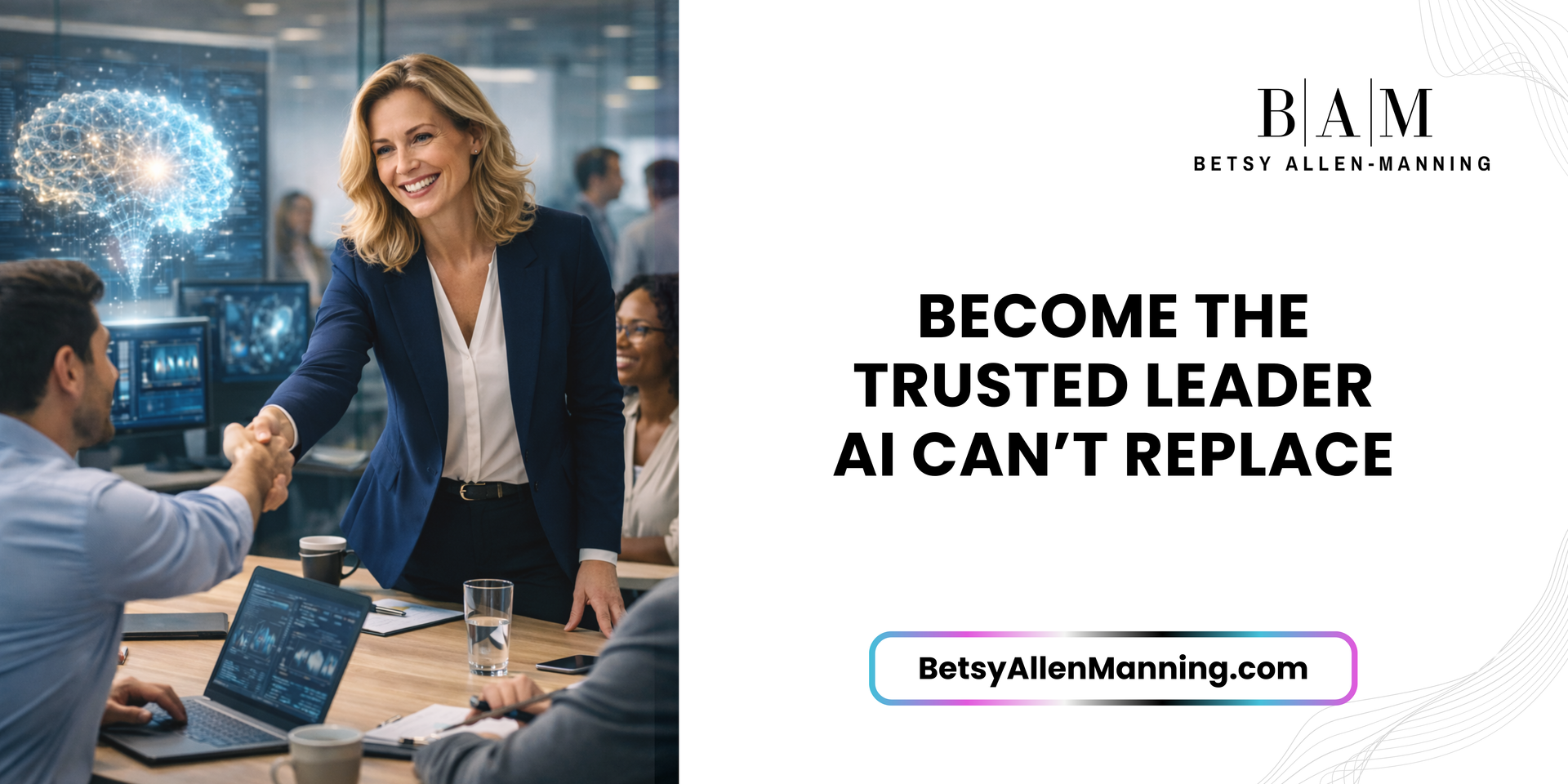
Technology may evolve, and AI can produce many answers to current workplace challenges, but it cannot replace the human experience and leadership trust.
I saw this firsthand recently while chatting with Emma, my ChatGPT. She confidently offered up results that, after a bit of research, turned out to be a stretch of the truth. This is not unusual. AI tools are known to hallucinate from time to time. What struck me was not the error itself, but the leadership parallel. We are living in what I call The Trust Deficit, and leaders cannot afford to operate the same way.
In order to stay relevant in the age of AI, leaders must become deeply trustworthy, human-centered decision makers who develop people and standards of excellence, not just outputs.
Why does leadership trust matter more than ever?
Technology has accelerated speed, access, and information. It has also accelerated skepticism. Employees are no longer impressed by titles, data dumps, or polished language. They are evaluating leaders on two core questions. ‘Can I trust you?’, and ‘Will you Develop Me?’
According to the National Workplace Trends Study, 52% of employees say they would accept a lower salary to work for a leader they respect and trust. That statistic alone should stop every executive team in its tracks. You can automate systems. You cannot automate trust.
What does leadership excellence look like in the AI era?
Leaders who will not be replaced by AI are not competing with technology. They are strengthening the human capabilities that technology cannot replicate. Specifically in 4 key areas:
1. Lead Yourself.
Leadership excellence begins internally. Leaders today need emotional discipline, character alignment, and personal accountability. Trusted leaders think before they speak, verify before they repeat, and operate with an excellence mindset that does not cut corners.
A leader’s character is contagious. AI cannot model character like a human can.
2. Lead Others.
In modern workplaces, leadership is no longer about having the answers. It is about having the skills to coach people through complexity and develop decision-making confidence in others. Leaders who rely on AI to replace conversation, feedback, or accountability slowly erode trust.
Leadership is not a position or title; it’s a responsibility. You are responsible for developing yourself so that you’re capable of developing others.
3. Lead the Environment.
Every leader at every level either contributes to the workplace or contaminates it. Technology can support culture, but leaders who reinforce standards, core values and purpose determine it.
Leaders across your organization will either help you become a Destination Workplace® or a Resignation Workplace.
4. Lead the Future.
With leadership excellence as your organizational DNA, multiplication is inevitable. High-impact leaders equip teams with frameworks, expectations, and standards that raise them up. AI can scale information, but only leaders can develop leadership excellence in others.
The future belongs to organizations where leadership excellence is multiplied at every level.
The real leadership shift
AI will continue to advance. That is not the threat. The real threat is leaders who relinquish integrity and responsibility to tools instead of sharpening those qualities within themselves.
The leaders who cannot be replaced are the ones who understand that technology may support the work, but trust still leads the people.
About Betsy:
Betsy Allen-Manning is a high-energy leadership keynote speaker who helps organizations raise leadership standards, elevate performance, and build workplaces people choose to stay in.
Featured on FOX, CBS, NBC, and ABC, Betsy works with organizations across corporate, franchise, association, nonprofit, and government sectors to develop leadership excellence at every level. Her work is grounded in original national workplace research and delivered through her proprietary DNA of Leadership Excellence framework, connecting identity, behavior, and accountability directly to performance, engagement, and retention.
Betsy is the founder of Destination Workplace®, an award-winning leadership training company in Dallas, known for her highly interactive keynotes and workshops that equip leaders and teams with the language, standards, and accountability they continue to use long after the event ends.