
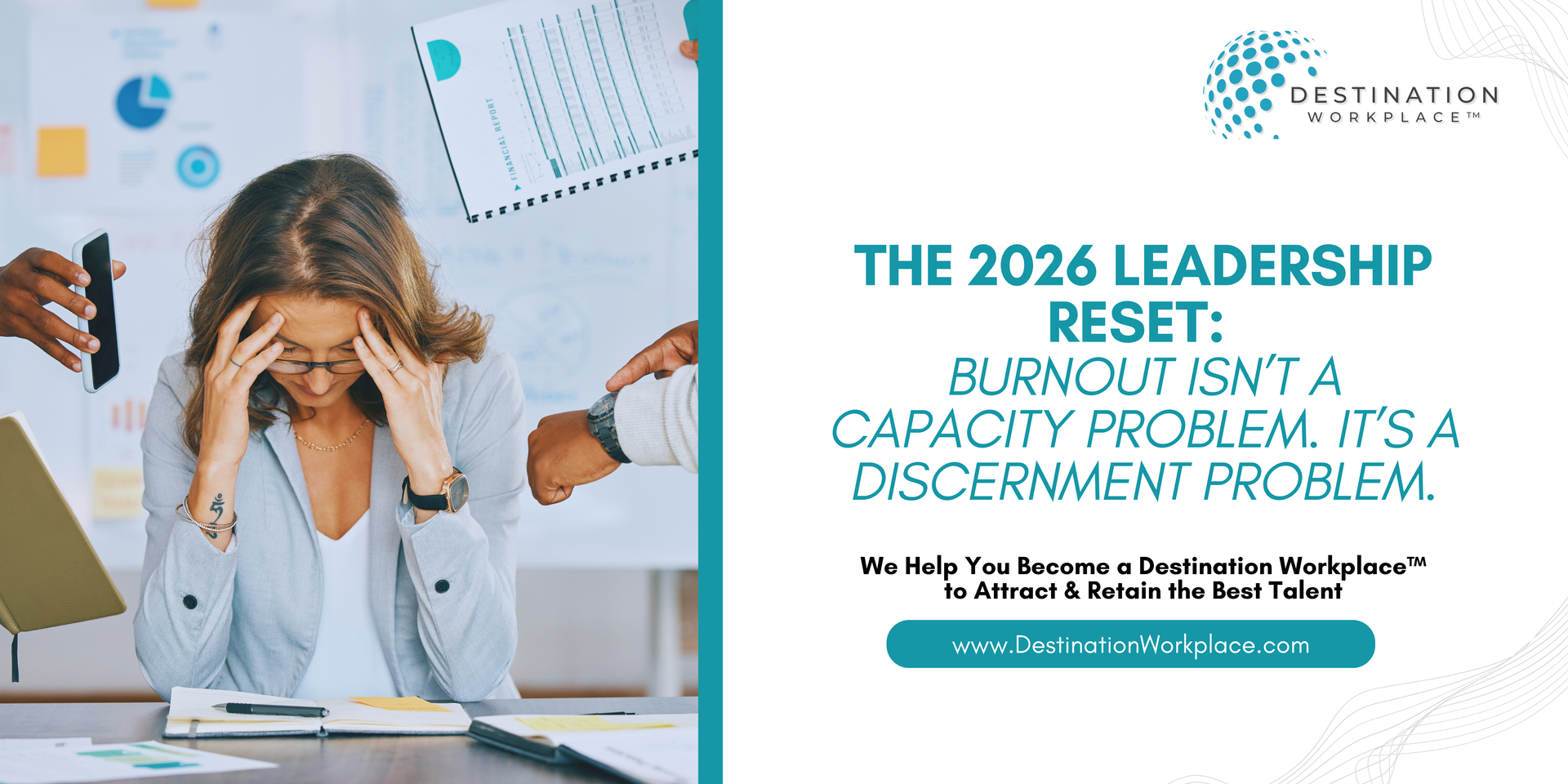
The 2026 Leadership Reset:
Burnout Isn’t a Capacity Problem. It’s a Discernment Problem.
The start of a new year doesn’t usually bring clarity for leaders.
It brings a quieter question:
What can’t continue like this?
For many leaders, the answer isn’t workload. It’s what they’ve been carrying that was never theirs to carry.
Early in my leadership career, I learned this lesson the hard way. As a brand-new supervisor at a five-star hotel, I believed leadership meant availability at all costs. If the owner called at 2 a.m., I answered. Not because the building was on fire, but because I thought that’s what commitment looked like.
I worked days. Those calls destroyed my sleep. I worked three weeks straight, sixteen-hour days, and slept at the hotel. I skipped meals and felt guilty taking a ten-minute break to eat. Eventually, the general manager had to force me to take time off.
I genuinely believed I was the only one who could do the job.
That wasn’t commitment. That was my first ‘beginner’ leadership mistake.
The Real Cost of Leadership Burnout
Leadership burnout doesn’t usually show up as collapse. It shows up as quiet erosion.
Leaders start absorbing:
- Everyone else’s urgency
- Emotional reactions they didn’t create
- Responsibility for other adults’ motivation
- Guilt when accountability creates discomfort
Over time, discernment disappears. Boundaries blur. Leaders confuse being needed with being effective. And the workplace cost is significant: decision fatigue, dependency, inconsistent standards, and teams that never fully step up because the leader never steps back.
What Leaders Are Actually Searching For
Quick answer: Leaders reduce burnout by rebuilding discernment, establishing boundaries, and refusing to absorb what isn’t theirs to carry.
Discernment is knowing what requires leadership and what requires ownership from someone else. Boundaries clarify roles. And stopping emotional absorption is what allows leaders to stay grounded instead of depleted.
What Discernment Looks Like in Practice
Discernment is not emotional distance. It’s clarity.
It sounds like:
- Listening without rescuing
- Asking, “What’s your next step?” instead of fixing
- Recognizing the difference between availability and effectiveness
- Letting discomfort exist without rushing to resolve it
When I look back, no one expected me to sacrifice my health. I placed that expectation on myself. That’s the quiet trap many leaders fall into.
Why Boundaries Are a Leadership Skill
Boundaries aren’t about working less. They’re about leading better.
Healthy leadership boundaries look like:
- Not answering every call to prove commitment
- Holding space for frustration without carrying it
- Ending venting loops with accountability
- Being clear about decision rights
When leaders don’t set boundaries, teams learn to over-rely. When leaders do, teams learn to lead themselves.
The Leadership Reset No One Talks About
Burnout didn’t come from my workload. It came from what I absorbed that wasn’t mine to carry.
Leadership isn’t about endurance. It’s about stewardship. You were never meant to absorb everything so others could avoid responsibility.
The quiet leadership reset isn’t dramatic. It’s internal.
And it changes everything.
About Betsy: Featured on FOX, CBS, NBC, and ABC,
Betsy Allen Manning is a high-energy leadership keynote speaker and workplace culture strategist who equips organizations across corporate, franchise, association, non-profit, and government sectors to develop high-achievers, high-impact leaders, and high-purpose cultures. Through her
national workplace research and DNA Activation Framework, she delivers data-backed, high-interaction keynote presentations and workshops that strengthen performance, leadership, and retention. Betsy is also the founder of
Destination Workplace™, an award-winning leadership training company in Dallas, trusted by some of the world's most elite brands nationwide.